
Request a Free In-Home Consultation
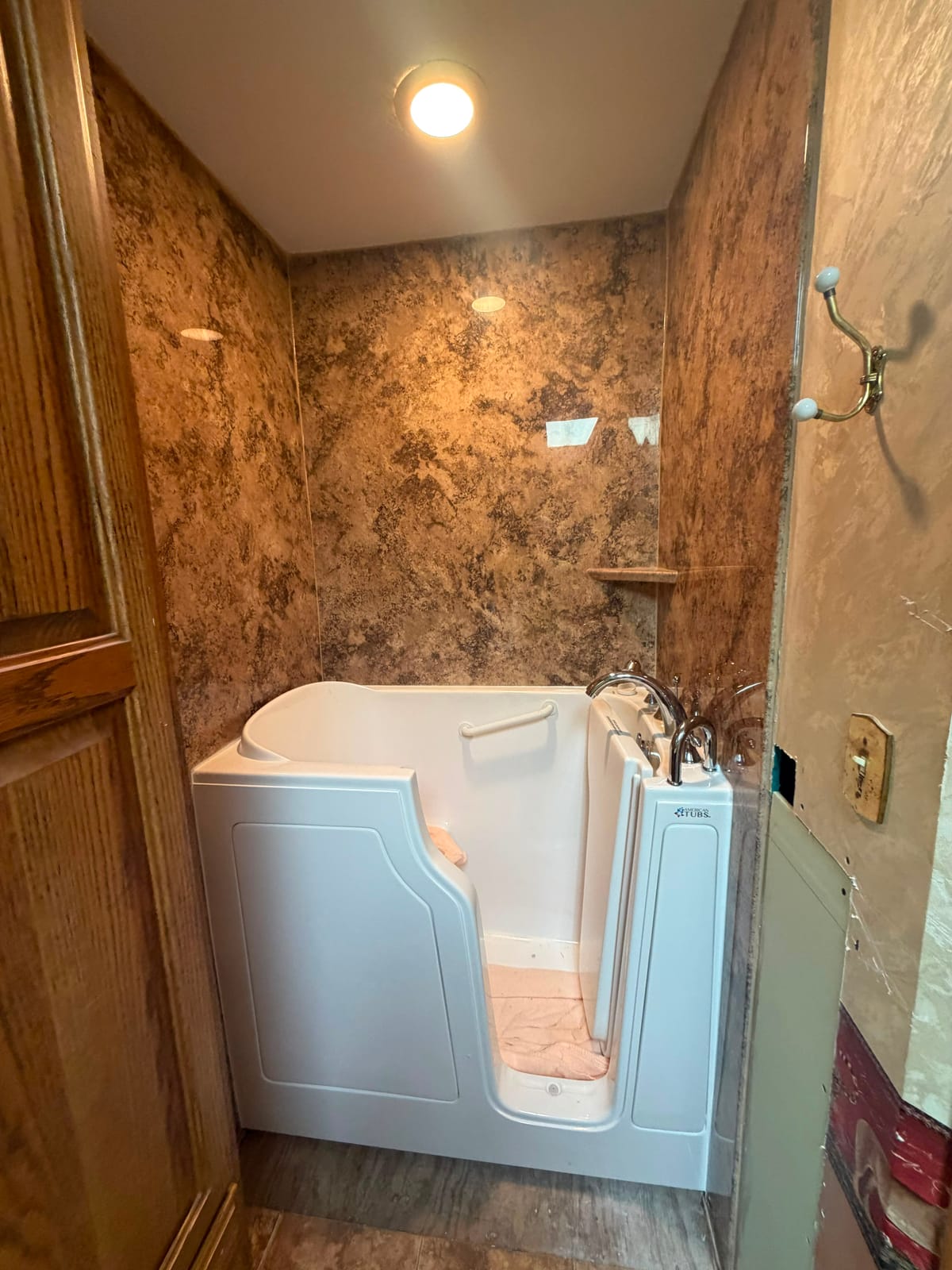
Walk-In Tub Installation in Nashville, TN
Keep the bath. Lose the step over the wall.
Licensed
Tennessee License #82885
5.0 / 5 Rating
6 Google reviews
Financing
Options may be available
A walk-in tub answers a narrow problem well: you still want to take a bath, and the wall of the tub you have has become the reason you do not.
Who a Walk-In Tub Is Actually For
Worth being blunt about this, because it is the decision that matters and most of the industry skips past it.
A walk-in tub is the right call when bathing is something you genuinely value. You sit down at seat height rather than lowering yourself to the floor of a tub, the door means no step over a wall, and the water comes up around you the way a bath is supposed to.
It is the wrong call when the tub in your bathroom has not held water in five years and is functionally just a shower with an obstacle in front of it. In that case a tub-to-shower conversion is quicker, usually costs less, and gives you a room that is easier to use every single day rather than on bath nights.
We would rather have that conversation at the consultation than sell you the more expensive fixture. Most people already know which of the two they are, they just have not been asked.
The Fill-and-Drain Question, Answered Honestly
The door on a walk-in tub cannot open while there is water above the seal. So the sequence is: open the door, sit down, close the door, fill, bathe, drain, then get out.
That means you are sitting in an empty tub while it fills and sitting in a wet one while it empties. Nobody selling walk-in tubs leads with this, and it is the most common regret we hear about them.
It is manageable, and the fittings that manage it are worth specifying rather than discovering you do not have:
- Fast-fill and fast-drain. A larger supply and a larger drain, which cuts the wait at both ends substantially.
- An in-line heater. Keeps the water at temperature while the tub is filling, so the first few minutes are not cold.
- A handheld on a slide bar. Useful for rinsing while the tub drains, and useful generally.
If, having heard that, the wait sounds like something you would come to resent, that is a genuinely useful thing to learn before you buy one rather than after.
The Door, the Seal and the Swing
The door is the whole reason the fixture exists and it is also the only part of your bathroom with a moving watertight seal, so it deserves more thought than the colour of the surround.
Inward-swinging doors have a smaller footprint, and the water pressure inside works with the seal rather than against it. The trade is that the door occupies space inside the tub, which is felt most in a narrow room.
Outward-swinging doors give a wider and lower entry, which is the better answer if you use a walker or transfer from a seat. They need clear floor in front of the tub, and the latch and hinges carry more of the load.
Neither is simply better. It depends on the width of your bathroom, the door into the room, and how you will actually get in. And on maintenance, the honest answer for either is the same: the seal is the wear part, keep it clean and dry, and do not use the door as a handhold. There is a grab bar for that.
What Happens Behind the Wall
A walk-in tub is not a fixture swap, for two reasons that both sit out of sight.
The first is weight. These tubs are deeper than what they replace, so a full tub with a person in it puts a heavier load in the same place on the floor. Documenting the floor structure is part of the measurement visit, and if it needs attention we say so before the work starts.
The second is the plumbing and the power. The drain rarely lands exactly where the old one did, an anti-scald valve belongs on a fixture someone sits in while it fills, and a hydrotherapy model with jets or a heater needs a dedicated circuit rather than whatever outlet is closest. All of that is planned into the scope before anything is ordered, which is the same sequence every Oakstone project follows and the reason projects do not stall halfway.
Surrounds are acrylic or stone. If you want the room to do more than take the tub, accessible bathroom work covers blocking for grab bars, reach distances and lighting, and the right time to do any of it is while the wall is already open.
Our Process
What to Expect
- 1
In-Home Consultation
We talk about how you actually bathe now and what has become difficult, then look at the room. Whether a walk-in tub or a shower conversion is the better answer for you is a conversation, not a foregone conclusion.
- 2
Measurements & Documentation
Oakstone measures the existing alcove and documents conditions, including the floor structure and what the drain and supply lines are doing, since a walk-in tub is heavier full than the tub it replaces.
- 3
Design & Material Selection
You choose the model, the door swing and the surround. We plan the drain, valve and any electrical the model needs, then order once the scope is approved.
- 4
Professional Installation
The old tub comes out, the drain and valve work is reworked for the new unit, and the surround goes in with attention to what sits behind it.
What a Walk-In Tub Project Can Include
- Walk-In Tub Selection
- Soaker & Hydrotherapy Models
- Inward or Outward Door Options
- Existing Alcove Assessment
- Drain & Valve Work
- Anti-Scald Valve
- Grab Bars & Blocking
- Acrylic or Stone Surround
Built to Last
Craftsmanship you can stand on
Every walk-in tubs project at Oakstone Kitchen and Bath LLC is backed by a free in-home design consultation and careful, measured work. We use high-quality materials and expert craftsmanship so your investment looks great and lasts for years to come.
Call (629) 200-1525Where We Work
Walk-In Tubs across Middle Tennessee
Oakstone travels roughly 75 miles from our Lebanon base, covering Nashville and 106+ surrounding communities. These are the towns we are asked about most often for walk-in tubs, and each page covers the county, which authority issues permits there, and what the local housing stock usually means for the work.
See the full service area map and town list →Ready to start your project? Call for a FREE estimate.
(629) 200-1525FAQ
Frequently Asked Questions
How much does it cost to have a walk-in tub installed?
We do not publish a figure, because the spread is genuinely wide and a number on a website is not a quote. What moves it: whether the new unit fits your existing alcove or the opening has to change, whether you want a plain soaker or a hydrotherapy model with air or water jets, whether that model needs a dedicated electrical circuit run to it, how far the drain has to move, and what is found behind the wall once the old tub is out. Our bathroom remodel cost guide explains the same drivers in more detail, and the in-home consultation is free.
Will a walk-in tub fit where my old tub is?
Often, yes. Many walk-in tubs are built to drop into a standard alcove footprint, which is what makes this a same-space swap rather than a rebuild in a lot of homes. It is not universal though, and the depth and the door swing matter as much as the length, so it is worth measuring rather than assuming.
Do I have to sit in it while it fills and drains?
Yes, and this is the single thing people most wish they had known. The door cannot open until the water is below the seal, so you get in, sit, fill, bathe, then wait for it to drain before you can get out. That is worth thinking about honestly before you buy one. Fast-fill and fast-drain fittings shorten the wait considerably, and an in-line heater keeps the water warm while the tub is filling. If sitting through that does not appeal, a tub-to-shower conversion is very likely the better answer and we will tell you so.
Should I get a walk-in tub or convert to a walk-in shower?
It comes down to whether you genuinely bathe. If a soak is something you value and the only thing stopping you is climbing over a tub wall, a walk-in tub keeps what you actually want. If you have not taken a bath in years and the tub is just an awkward shower, converting it is faster, usually costs less, and gives you a room that is easier to get in and out of every day. Most people already know which they are.
Should the door swing in or out?
An inward-swinging door has a smaller footprint and the water pressure helps hold the seal, but the door takes up room inside the tub, which matters if space is tight. An outward-swinging door gives a wider, easier entry, which suits a walker or a transfer from a seat, but it needs clear floor space in front of it and the latch does more of the work. Which one suits your bathroom depends on the room, not on the brochure.
Will my floor take the weight?
It is a fair question and one we check rather than assume. A walk-in tub holds more water than a standard tub because it is deeper, so a full tub with someone in it is a meaningfully heavier load in the same spot. Documenting the floor structure is part of the measurement visit, and if anything needs attention we raise it before the work starts rather than after.
What is the part most likely to need attention later?
The door seal. It is the one component doing a job nothing else in a bathroom does, and it wears. Keeping it clean and dry, and not leaning on the door as a handhold, is most of the maintenance. Ask about the product warranty on the door and seal specifically during your consultation.
Can you add grab bars at the same time?
Yes, and during the installation is the right time. A grab bar is only as strong as the blocking behind the wall, and blocking is straightforward to add while the wall is open and awkward to retrofit afterwards. Our accessible bathrooms page goes into what makes a grab bar actually hold.
Does a hydrotherapy model need an electrician?
If it has air or water jets, or a heater, it needs power, and that usually means a dedicated circuit rather than the nearest outlet. That is planned into the scope before anything is ordered, so it is not a surprise mid-project. A plain soaker model has no such requirement.
Are you licensed?
Yes. Oakstone Kitchen and Bath LLC holds Tennessee license
Do you offer financing?
Yes. Financing options are available to qualified homeowners. See the financing page on this site for details, or ask during your free in-home consultation.